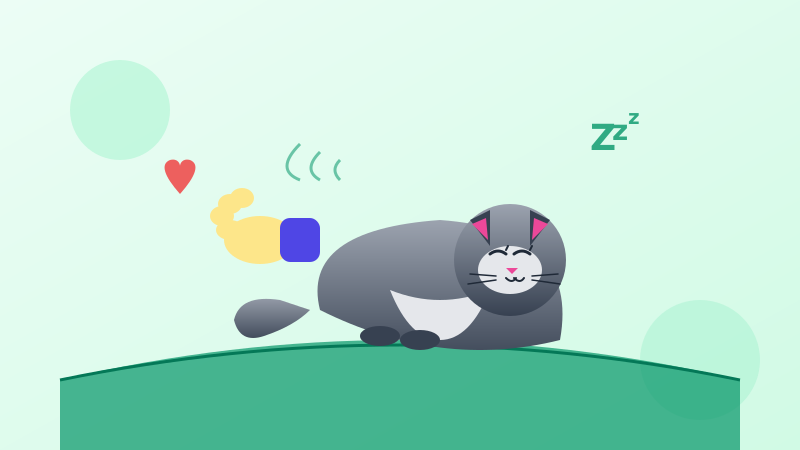
Few sounds in nature are as comforting as a cat's purr. That deep, rumbling vibration has been soothing humans for at least 10,000 years, since cats first began their long partnership with us. Yet despite our intimate familiarity with the sound, the scientific explanation for why and how cats purr remained mysterious until recent decades — and some questions remain unanswered today.
How Cats Produce Purrs
For centuries, scientists debated the mechanism. Some proposed that purring came from blood flow through the inferior vena cava. Others suggested it originated in the pharynx. The answer, finally confirmed through electromyography studies in the 1980s and 1990s, turned out to be more elegant: cats purr through rapid movements of the laryngeal muscles.
Here's the process: a signal from the brain's neural oscillator triggers the laryngeal muscles to contract and relax at a rate of 25 to 150 times per second. This causes the vocal cords to separate and then rejoin, creating a sound on both inhalation and exhalation. This continuous mechanism is why a cat can purr without interrupting normal breathing — they purr "in" and "out" simultaneously.
Why Cats Purr
The obvious answer is contentment, but it's not the whole story. Cats purr in a surprising range of situations:
Contentment and Bonding
The most familiar context. Kittens and mothers purr during nursing — it's thought to be one of the earliest forms of communication between them, signaling availability and mutual recognition. Adult cats often purr when being petted, fed, or kept warm.
Self-Soothing During Stress
Cats also purr when frightened, injured, or ill. A cat in the waiting room at the veterinary hospital may purr even while clearly terrified. This "self-soothing" purr seems to help the cat regulate stress and may even have physical benefits (more on that below).
Solicitation Purrs
In 2009, researchers at the University of Sussex discovered that some domestic cats produce "solicitation purrs" — a purr embedded with a higher-frequency cry similar to a baby's cry. This specialized purr appears specifically designed to manipulate human behavior, particularly for food. The frequency range matches mammalian infant cries and is harder for humans to ignore than a normal purr.
Communicating to Kittens
Mother cats purr to their kittens at frequencies their newborns can feel through vibration. Since kittens are born deaf and blind, these vibrations help them locate their mother and feel secure.
The Healing Frequency Hypothesis
Here's where it gets fascinating. Purrs range from roughly 25 to 150 Hertz, and multiple studies have found that frequencies in this range promote healing:
- 25-50 Hz frequencies have been shown to promote bone density and healing of fractures
- 50-100 Hz frequencies appear to help heal tendons
- Similar frequencies are used in human physical therapy for promoting wound healing and reducing pain
Cats have remarkably strong bones and heal quickly from injuries, and researchers have proposed that purring may be part of the reason. A cat that spends 16+ hours per day resting may use purring as a form of low-energy exercise to maintain bone density — much like how humans might do weight-bearing exercise.
This hypothesis is still being studied. It's not yet proven that purring has direct medical benefits to cats, but the frequency coincidence is striking and plausible.
Benefits to Humans
Multiple studies have documented that interacting with purring cats can:
- Lower blood pressure
- Reduce stress hormones (cortisol)
- Release serotonin and dopamine
- Decrease risk of heart attack (a 2008 University of Minnesota study found cat owners had a 30 percent lower risk of heart attack than non-cat-owners)
The combination of low-frequency vibrations, physical warmth, and the calming effect of a relaxed animal creates a measurable physiological response in humans. This is partly why therapy cats are now used in hospitals, hospices, and assisted living facilities.
Can All Cats Purr?
Most domestic cats purr, but the mechanism varies across felids. Scientists divide the cat family into "purring cats" (smaller cats like domestic cats, cheetahs, and bobcats) and "roaring cats" (lions, tigers, leopards, jaguars). Roaring cats can't purr continuously like domestic cats because their hyoid bones don't fully ossify, which allows roaring but prevents the steady purr mechanism.
Some individual domestic cats simply don't purr much, or purr very quietly. This is usually just personality variation. Some cats are also "silent purrers" who vibrate visibly but produce little audible sound.
When to Pay Attention
A cat who suddenly starts purring excessively, especially while in an unusual position or avoiding touch, may be in pain or distress. Purring isn't always a sign of happiness. Watch for other signs of illness: decreased appetite, hiding, litter box changes, weight loss, or behavioral changes. Trust your observation of your cat's overall state rather than the purr alone.
Conversely, a cat who has always purred and suddenly stops may be under stress or feeling unwell. Consult your veterinarian if you notice persistent behavioral changes.
Final Thoughts
The cat's purr remains one of the small domestic miracles we share our homes with. Science has explained the mechanism and documented some of the effects, but the experience of a purring cat settled into your lap remains something no equation can fully capture. Whatever the evolutionary purpose, the result is clear: purring creates connection, soothes both cat and human, and may quietly support healing in ways we're still learning to measure.
About the author: Dr. Emily Chen, Veterinary Behaviorist contributes to PetsCareWiki on topics within their area of expertise. This article is for educational purposes and does not replace personalized professional advice. Consult your veterinarian for decisions specific to your pet.